
Russian Language
Russian (русский язык, russkiy yazyk) is an East Slavic language belonging to the Indo-European family. It is the most widely spoken native language in Europe and the largest of the Slavic languages by number of speakers, geographic distribution, and cultural influence. Russian serves as the official language of the Russian Federation and is one of the six official languages of the United Nations.
Classification and Related Languages
Russian is a member of the Indo-European language family, within the Balto-Slavic branch, and more specifically, the East Slavic subgroup. Its closest linguistic relatives are Ukrainian and Belarusian, with which it shares a common origin in Old East Slavic, the language of the medieval state of Kievan Rus’ (9th–13th centuries).
Levels of mutual intelligibility:
-
Russian and Belarusian: high degree of mutual intelligibility (approx. 80%).
-
Russian and Ukrainian: partial mutual intelligibility (approx. 60%); comprehension varies depending on dialect and exposure.
-
Russian and other Slavic languages (Polish, Czech, Bulgarian, etc.): limited intelligibility without study, though vocabulary and grammatical parallels exist due to shared Slavic roots.
Geographical Distribution and Speakers
Russian is the native language of roughly 145 million people and is spoken as a second language by over 60 million more, bringing the total number of speakers to around 205 million worldwide (as of the mid-2020s).
It is spoken predominantly in:
-
Russia (official language)
-
Belarus (co-official with Belarusian)
-
Kazakhstan and Kyrgyzstan (official at national or regional levels)
-
Ukraine, the Baltic states, the Caucasus, and Central Asia, where it functions as a lingua franca.
Large Russian-speaking communities also exist in Israel, Germany, the United States, and Canada due to emigration.
Historical Development
Origins
Russian evolved from Old East Slavic, the vernacular of Kievan Rus’. After the fragmentation of that state in the 13th century, regional dialects developed into distinct East Slavic languages: Russian, Ukrainian, and Belarusian.
Middle and Early Modern Russian
By the 15th century, the Moscow dialect became the linguistic foundation for the emerging Russian state. Church Slavonic, a South Slavic liturgical language, heavily influenced Russian vocabulary and style, contributing many learned and religious terms.
Modern Russian
The modern literary language was largely standardized by Alexander Pushkin (1799–1837), whose works blended colloquial and elevated forms into a flexible and expressive idiom. Subsequent reforms, especially the orthographic reform of 1918, simplified spelling and codified grammar.
Literature
Russian literature holds a central place in world culture. Notable works include:
-
Alexander Pushkin – Eugene Onegin (1833), the foundational modern novel in verse.
-
Nikolai Gogol – Dead Souls (1842), satirical portrayal of Russian society.
-
Fyodor Dostoevsky – Crime and Punishment (1866), The Brothers Karamazov (1880); deep psychological and moral explorations.
-
Leo Tolstoy – War and Peace (1869), Anna Karenina (1877); epics of realism and philosophy.
-
Anton Chekhov – master of the short story and modern drama.
-
20th-century figures include Mikhail Bulgakov (The Master and Margarita), Boris Pasternak (Doctor Zhivago), and Aleksandr Solzhenitsyn (The Gulag Archipelago).
Grammar
Russian is a synthetic, inflected language, characterized by rich morphology and relatively free word order, governed largely by case and agreement.
Nouns and Articles
Russian has no definite or indefinite articles. Definiteness is inferred from context or word order:
-
Я вижу стол — “I see a table” or “I see the table.”
-
Стол стоит у окна — “The table stands by the window.”
Cases
Russian has six grammatical cases (Nominative, Genitive, Dative, Accusative, Instrumental, Prepositional), marking nouns, pronouns, and adjectives for their syntactic roles.
Demonstrative Pronouns
| English | Russian | Example |
|---|---|---|
| this | этот (m.), эта (f.), это (n.), эти (pl.) | эта книга — this book |
| that | тот (m.), та (f.), то (n.), те (pl.) | тот дом — that house |
Relative Pronouns
The main relative pronoun is который (“which, that, who”), declined by gender, number, and case:
-
Дом, который я построил — “The house that I built.”
Verb System
Russian verbs are marked for tense, aspect, mood, person, and number.
Tenses
Russian distinguishes three tenses: past, present, and future.
| Tense | Example Verb: говорить (to speak) | Example Sentence | Translation |
|---|---|---|---|
| Present | я говорю | Я говорю по-русски. | I speak Russian. |
| Past | я говорил (m.), я говорила (f.) | Я говорил с ним. | I spoke with him. |
| Future (simple, perfective) | я скажу (сказать) | Я скажу завтра. | I will say it tomorrow. |
| Future (compound, imperfective) | я буду говорить | Я буду говорить завтра. | I will be speaking tomorrow. |
Conjugation Patterns
Verbs fall into two main conjugation classes.
| Person | 1st Conjugation (говорить) | 2nd Conjugation (читать) |
|---|---|---|
| 1st sg. | говорю | читаю |
| 2nd sg. | говоришь | читаешь |
| 3rd sg. | говорит | читает |
| 1st pl. | говорим | читаем |
| 2nd pl. | говорите | читаете |
| 3rd pl. | говорят | читают |
Syntax
Typical word order is Subject–Verb–Object (SVO), but due to the case system, variations (SOV, VSO, etc.) are common for emphasis or style.
Examples:
-
Маша читает книгу — “Masha reads a book.” (neutral)
-
Книгу читает Маша — “It is Masha who reads the book.” (emphatic)
Negation uses the particle не before the verb:
-
Я не знаю — “I do not know.”
Here is a comparative grammar table for the four major Slavic languages: Russian, Belarusian, Ukrainian, and Bulgarian.
The table focuses on core grammatical categories such as case systems, articles, verb aspects, conjugation, tenses, gender, and syntax — highlighting both shared Slavic features and divergent developments (especially between the East Slavic and South Slavic branches).
Comparative Grammar of Russian, Belarusian, Ukrainian, and Bulgarian
| Feature | Russian (East Slavic) | Belarusian (East Slavic) | Ukrainian (East Slavic) | Bulgarian (South Slavic) |
|---|---|---|---|---|
| Language Family | Indo-European → Balto-Slavic → East Slavic | Indo-European → Balto-Slavic → East Slavic | Indo-European → Balto-Slavic → East Slavic | Indo-European → Balto-Slavic → South Slavic (Eastern) |
| Alphabet | Cyrillic | Cyrillic (with ł, ґ) | Cyrillic (with ґ, є, ї, і) | Cyrillic |
| Number of Cases | 6 (Nom., Gen., Dat., Acc., Instr., Prep.) | 6 (same as Russian) | 7 (adds Vocative) | 0–2 (case system largely lost; retains vestiges in pronouns) |
| Articles | None | None | None | Definite article (enclitic): -ът/-та/-то/-те (e.g. книга → книгата “the book”) |
| Noun Genders | 3 (m., f., n.) | 3 (m., f., n.) | 3 (m., f., n.) | 3 (m., f., n.) |
| Plural Formation | Various suffixes, vowel alternation | Similar to Russian | Similar to Russian | Similar but regularized endings |
| Adjective Agreement | Yes (in gender, number, case) | Yes | Yes | Yes (but no case agreement, only gender/number/definiteness) |
| Definiteness | Contextual only | Contextual | Contextual | Expressed morphologically (postposed definite article) |
| Verb Aspects | Perfective / Imperfective pairs | Perfective / Imperfective pairs | Perfective / Imperfective pairs | Perfective / Imperfective pairs |
| Verb Tenses | 3 (past, present, future) | 3 | 3 | 9+ (past, imperfect, aorist, perfect, pluperfect, future, future-in-the-past, etc.) |
| Compound Future | буду + infinitive (imperfective verbs) | буду + infinitive | буду + infinitive | ще + present tense or съм + participle |
| Personal Verb Endings (Present) | -ю/-ешь/-ет/-ем/-ете/-ют | -ю/-еш/-е/-ем/-еце/-юць | -ю/-єш/-є/-ємо/-єте/-ють | -а/-еш/-е/-ем/-ете/-ат |
| Past Formation | Stem + л + gender endings (говорил, говорила) | Similar | Similar | Periphrastic: съм + past participle (аз съм говорил) |
| Infinitive | Yes (говорить) | Yes (гаварыць) | Yes (говорити) | Largely lost; uses да + present form (да говоря) |
| Participles | Yes (active/passive, past/present) | Yes | Yes | Yes, very productive (used in periphrastic tenses) |
| Negation | не before verb (не знаю) | не (не ведаю) | не (не знаю) | не (не зная) |
| Word Order | Flexible (SVO default) | Flexible (SVO default) | Flexible (SVO default) | More fixed (SVO), due to loss of cases |
| Clitic Placement | Rare | Rare | Rare | Extensive (clitic doubling, object pronoun placement rules) |
| Use of Vocative | Rare, mostly archaic (Боже!) | Still used (Мікола! “Nicholas!”) | Productive (Олеже! “Oleh!”) | Lost in modern speech |
| Stress Pattern | Free, mobile stress | Free, mobile stress | Free, mobile stress | Fixed tendency (usually on root or penultimate syllable) |
| Pronouns (1st Person Singular) | я | я | я | аз |
| Example Sentence | Я люблю читать книги. (“I love reading books.”) | Я люблю чытаць кнігі. | Я люблю читати книги. | Аз обичам да чета книги. |
| Translation (English) | “I love to read books.” | “I love to read books.” | “I love to read books.” | “I love to read books.” |
-
Russian, Belarusian, and Ukrainian share highly similar morphosyntax, maintaining the case system, aspectual opposition, and inflected verb endings.
-
Bulgarian, in contrast, diverged significantly, losing nominal cases and developing a definite article and complex tense system — features shared with its close relative Macedonian.
-
Ukrainian uniquely preserves a vocative case and features slightly different phonology (e.g., i/и distinction) and vocabulary closer to Polish.
-
Belarusian shows transitional features between Russian and Ukrainian, with softer consonant patterns and distinctive phonetics.
-
All four languages retain the Slavic verbal aspect system, a defining feature of the family.
Phonology
Russian has a five-vowel system /a, e, i, o, u/ with vowel reduction in unstressed syllables. It has 21 consonants, many of which form palatalized (“soft”) pairs. Stress is mobile and unpredictable, often distinguishing meaning:
-
замо́к (“lock”) vs. за́мок (“castle”).
Vocabulary
Russian vocabulary is largely Slavic but contains numerous borrowings:
-
From Old Church Slavonic (literary, religious terms)
-
From French (18th–19th centuries, e.g. буфет, “buffet”)
-
From English (modern borrowings, e.g. компьютер, “computer”)
Example sentences:
-
Привет! Как дела? — “Hi! How are you?”
-
Я люблю читать книги. — “I love reading books.”
-
Москва — столица России. — “Moscow is the capital of Russia.”
Dialects of the Russian Language
The Russian language, despite its high degree of standardization today, encompasses a wide range of regional dialects that reflect the country’s vast geography and complex historical development. Dialectal variation in Russian is both phonetic and lexical, with relatively minor grammatical differences. Traditionally, Russian dialectology divides spoken varieties into two major groups — Northern and Southern — with a transitional Central zone (sometimes called Middle Russian), from which the modern standard language evolved.
1. Historical Background
The differentiation of Russian dialects began after the disintegration of Old East Slavic in the 13th–15th centuries. As the territories of Kievan Rus’ fragmented, new political centers arose — notably Novgorod in the north and Moscow in the center — fostering regional linguistic divergence.
-
The Northern dialects evolved around Novgorod, Pskov, and later Arkhangelsk and Vologda.
-
The Southern dialects developed in the regions of Ryazan, Tula, Kursk, Oryol, and Voronezh.
-
The Central (Middle Russian) dialects spread between these zones, serving as a linguistic bridge and forming the basis for Standard Russian in the 18th–19th centuries.
2. Major Dialect Groups
A. Northern Russian Dialects (Севернорусские говоры)
Geographic area:
Arkhangelsk, Vologda, Kostroma, Novgorod, parts of Karelia, and northern Tver and Yaroslavl regions.
Key features:
-
No vowel reduction: unstressed vowels o and a are pronounced distinctly (unlike in standard Russian).
-
Example: гора (“mountain”) → [gora], not [gará].
-
-
Clear, hard pronunciation of consonants; less palatalization.
-
Frequent use of the sound /ɣ/ (voiced velar fricative) instead of /g/.
-
Example: гора → [ɣora].
-
-
Preservation of old inflectional endings and archaic vocabulary.
-
Lexical items influenced by contact with Finno-Ugric languages (e.g., Komi, Karelians).
Sociolinguistic note:
These dialects are considered more conservative, retaining many features of Old Russian phonology.
B. Southern Russian Dialects (Южнорусские говоры)
Geographic area:
Tula, Ryazan, Oryol, Kursk, Belgorod, Tambov, Voronezh, and parts of southern Bryansk and Lipetsk regions.
Key features:
-
Akanye: unstressed o and a merge to /a/ (common also in standard Russian, but stronger in the south).
-
Yakanye: unstressed e and a after soft consonants merge to /a/.
-
Pronunciation of /ɣ/ or /h/ for г — a feature shared with Ukrainian and Belarusian.
-
Example: дорога (“road”) → [doroha].
-
-
Softening of final consonants and шч pronounced as /ʃt͡ʃ/ (щ → “shch”).
-
Rich vocabulary of folk and agricultural terms; some archaic Church Slavonic forms persist.
-
Use of distinctive intonation patterns and stress shifts.
Sociolinguistic note:
Southern dialects are regarded as innovative and have influenced the expressive style of Russian literature, especially in peasant and folk speech depictions (e.g., in works by Tolstoy and Sholokhov).
C. Central (Middle Russian) Dialects (Среднерусские говоры)
Geographic area:
Moscow, Vladimir, Tver, and surrounding regions — forming a transitional zone between the northern and southern dialects.
Key features:
-
Combination of northern consonant patterns with southern vowel patterns (akanye).
-
The basis of the modern standard language, due to the historical prestige of the Moscow dialect.
-
Relatively stable phonetics and morphology, fewer extreme local variations.
Sociolinguistic note:
This dialect group gradually became dominant as Moscow grew politically and culturally. The Standard Russian language codified in the 18th–19th centuries by writers like Pushkin and grammarians like Lomonosov is largely based on Central dialect speech.
3. Subregional Dialects and Transitional Areas
Beyond the three major zones, Russian has numerous localized subdialects (говоры):
| Region | Dialect Notes |
|---|---|
| Novgorod | Retains unique archaisms; Old Novgorodian birchbark letters show distinct phonology. |
| Pskov | Transitional between northern and southern; shares h-pronunciation of г. |
| Tver | Central transitional dialect with northern influence. |
| Oryol–Kursk | Typical southern dialect, with yakanye and voiced г → ɣ/h. |
| Vladimir–Moscow | Central dialects forming the core of Standard Russian. |
| Siberian Russian | A modern colonial koine; features mixed from northern dialects and borrowings from Turkic and indigenous Siberian languages. |
| Don and Kuban Cossack Speech | Southern-based with Ukrainian influence; often considered mixed or dialectal varieties rather than separate languages. |
4. Dialects in Modern Russia
Standardization and Urban Speech
In modern times, mass education, media, and internal migration have led to a high degree of dialect leveling. Most Russians today speak Standard Russian or regional variants of it, often with only minor pronunciation or vocabulary differences.
Urban dialects, such as Moscow and St. Petersburg colloquial speech, now dominate and form the linguistic norm.
Surviving Rural Dialects
Traditional dialects are still found among older speakers in rural areas, especially in:
-
Northern regions (Arkhangelsk, Vologda, Kostroma)
-
Southern rural districts (Oryol, Kursk, Belgorod)
-
Isolated Siberian settlements founded by early Russian colonists.
Dialect Influence on Literature and Culture
Russian writers frequently drew on dialectal speech for authenticity and character portrayal:
-
Nikolai Gogol and Mikhail Sholokhov used southern dialect forms.
-
Nikolai Leskov and Fyodor Abramov incorporated northern dialect speech.
-
Contemporary Russian continues to absorb regional expressions, especially in folklore, songs, and film.
5. Summary Table: Key Dialectal Contrasts
| Feature | Northern Dialects | Central (Middle) Dialects | Southern Dialects |
|---|---|---|---|
| Unstressed o | Distinct (no reduction) | Merged to /a/ (akanye) | Strong akanye |
| Pronunciation of г | [g] or [ɣ] | [g] | [ɣ] or [h] |
| e after soft consonants | Stable /e/ | Reduced /i/ or /ʲe/ | Yakanye (/a/) |
| Consonant softness | Mostly hard | Moderate | Strongly palatalized |
| Influence of other languages | Finno-Ugric | None significant | Ukrainian, Belarusian |
| Lexical character | Archaic, conservative | Neutral | Folk, innovative |
| Example word (“milk”) | молоко́ [molokó] | малако́ [malakó] | малако́ [malakó] |
While Standard Russian is remarkably uniform across the vast territory of Russia, the dialectal diversity beneath this standard reflects centuries of historical separation, migration, and cultural contact.
Modern dialect research — supported by the Dialect Atlas of the Russian Language (Диалектологический атлас русского языка, Moscow, 1986–2015) — continues to document these regional variations as valuable witnesses to Russia’s linguistic history.
Conclusion
The Russian language combines ancient Slavic roots with a rich literary heritage and complex grammatical structure. As both a language of global diplomacy and a carrier of one of the world’s great literary traditions, Russian remains a major force in linguistic, cultural, and political spheres across Eurasia and beyond.
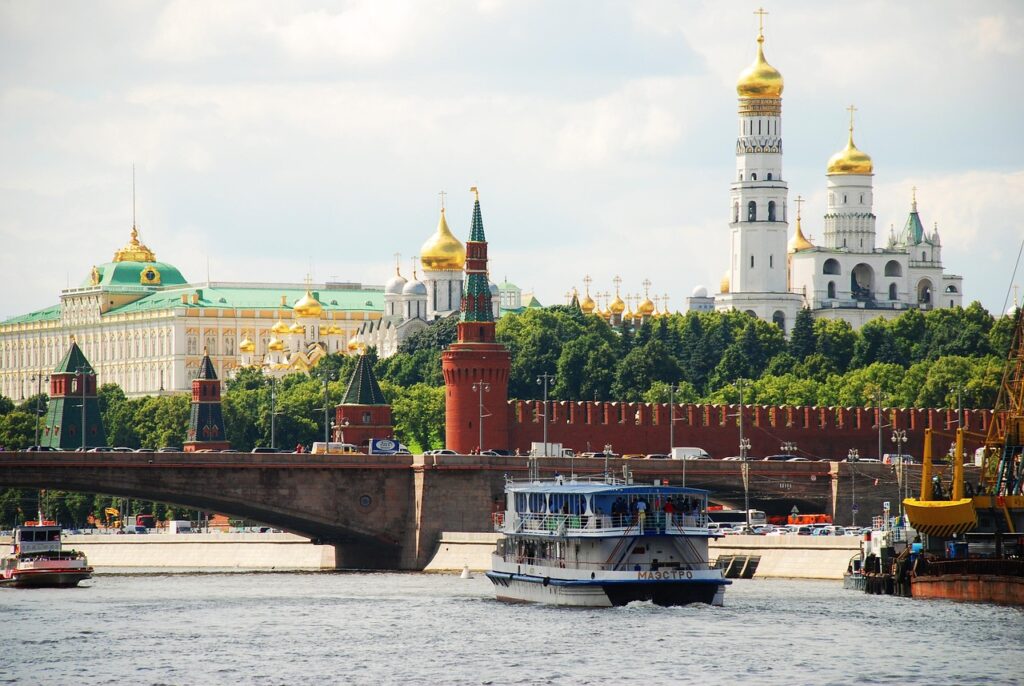
Themed Phrasebook of Russian
1. Greetings and Introductions
| Russian (Cyrillic) | Transliteration | English |
|---|---|---|
| Привет! | Privet! | Hi! (informal) |
| Здравствуйте! | Zdravstvuyte! | Hello! (formal) |
| Доброе утро | Dobroye utro | Good morning |
| Добрый день | Dobryy den’ | Good afternoon |
| Добрый вечер | Dobryy vecher | Good evening |
| До свидания | Do svidaniya | Goodbye |
| Пока | Poka | Bye (casual) |
| Как дела? | Kak dela? | How are you? |
| Хорошо, спасибо | Khorosho, spasibo | Good, thank you |
| Меня зовут Анна | Menya zovut Anna | My name is Anna |
| Очень приятно | Ochen’ priyatno | Nice to meet you |
📝 Note:
Formal greeting: Здравствуйте!
Informal: Привет! (used among friends or peers)
2. Travel and Directions
| Russian | Transliteration | English |
|---|---|---|
| Где метро? | Gde metro? | Where is the metro? |
| Как пройти к вокзалу? | Kak proyti k vokzalu? | How do I get to the train station? |
| Мне нужно в центр города | Mne nuzhno v tsentr goroda | I need to go to the city center |
| Сколько стоит билет? | Skol’ko stoit bilet? | How much is the ticket? |
| Один билет, пожалуйста | Odin bilet, pozhaluysta | One ticket, please |
| Я заблудился / заблудилась | Ya zabludilsya / zabludilas’ | I’m lost (m./f.) |
| Это далеко? | Eto daleko? | Is it far? |
| Поверните налево / направо | Povernite nalevo / napravo | Turn left / right |
| Прямо | Pryamo | Straight ahead |
3. Accommodation
| Russian | Transliteration | English |
|---|---|---|
| У вас есть свободные номера? | U vas yest’ svobodnye nomera? | Do you have any free rooms? |
| Я забронировал номер | Ya zabroniroval nomer | I booked a room |
| Сколько стоит одна ночь? | Skol’ko stoit odna noch’? | How much is one night? |
| Есть ли завтрак? | Yest’ li zavtrak? | Is breakfast included? |
| Где находится лифт? | Gde nakhoditsya lift? | Where is the elevator? |
| Мне нужен ключ от номера | Mne nuzhen klyuch ot nomera | I need the room key |
4. Dining and Food
| Russian | Transliteration | English |
|---|---|---|
| Меню, пожалуйста | Menyu, pozhaluysta | Menu, please |
| Я хочу заказать… | Ya khochu zakazat’… | I’d like to order… |
| Счёт, пожалуйста | Schyot, pozhaluysta | The bill, please |
| Без мяса, пожалуйста | Bez myasa, pozhaluysta | Without meat, please |
| Очень вкусно! | Ochen’ vkusno! | Very tasty! |
| Воды, пожалуйста | Vody, pozhaluysta | Water, please |
| Чай / кофе | Chay / kofe | Tea / coffee |
| Сколько стоит суп? | Skol’ko stoit sup? | How much is the soup? |
5. Shopping and Money
| Russian | Transliteration | English |
|---|---|---|
| Сколько это стоит? | Skol’ko eto stoit? | How much does this cost? |
| Можно дешевле? | Mozhno deshevle? | Can it be cheaper? |
| У вас есть сдача? | U vas yest’ sdacha? | Do you have change? |
| Я плачу картой / наличными | Ya plachu kartoy / nalichnymi | I’m paying by card / in cash |
| Где банкомат? | Gde bankomat? | Where is the ATM? |
| Магазин | Magazin | Shop / store |
| Подарок | Podarok | Gift |
6. Time and Numbers
| Russian | Transliteration | English |
|---|---|---|
| Который час? | Kotoryy chas? | What time is it? |
| Сейчас три часа | Seychas tri chasa | It’s three o’clock |
| Сегодня / завтра / вчера | Segodnya / zavtra / vchera | Today / tomorrow / yesterday |
| Один, два, три, четыре, пять | Odin, dva, tri, chetyre, pyat’ | One, two, three, four, five |
| Неделя / месяц / год | Nedelya / mesyats / god | Week / month / year |
7. Emergencies and Health
| Russian | Transliteration | English |
|---|---|---|
| Помогите! | Pomogite! | Help! |
| Позвоните в скорую! | Pozvonite v skoruyu! | Call an ambulance! |
| Мне плохо | Mne plokho | I feel unwell |
| Где аптека? | Gde apteka? | Where is the pharmacy? |
| У меня аллергия | U menya allergiya | I have an allergy |
| Я потерял паспорт | Ya poteryal pasport | I’ve lost my passport |
8. Social and Everyday Phrases
| Russian | Transliteration | English |
|---|---|---|
| Спасибо | Spasibo | Thank you |
| Пожалуйста | Pozhaluysta | Please / You’re welcome |
| Извините | Izvinite | Excuse me / Sorry |
| Не понимаю | Ne ponimayu | I don’t understand |
| Говорите медленнее | Govorite medlenneye | Speak more slowly |
| Вы говорите по-английски? | Vy govorite po-angliyski? | Do you speak English? |
| Я немного говорю по-русски | Ya nemnogo govoryu po-russki | I speak a little Russian |
| Всё в порядке | Vsyo v poryadke | Everything’s fine |
9. Transport and Navigation
| Russian | Transliteration | English |
|---|---|---|
| Такси | Taksi | Taxi |
| Автобус / поезд / самолёт | Avtobus / poyezd / samolyot | Bus / train / airplane |
| Где остановка автобуса? | Gde ostanovka avtobusa? | Where is the bus stop? |
| Ближайшее метро | Blizhaysheye metro | Nearest metro |
| Сколько времени ехать? | Skol’ko vremeni yekhat’? | How long does it take? |
10. Weather and Nature
| Russian | Transliteration | English |
|---|---|---|
| Какая сегодня погода? | Kakaya segodnya pogoda? | What’s the weather today? |
| Холодно / жарко | Kholodno / zharko | It’s cold / hot |
| Идёт дождь / снег | Idet dozhd’ / sneg | It’s raining / snowing |
| Солнце / облака / ветер | Solntse / oblaka / veter | Sun / clouds / wind |
| Мне холодно | Mne kholodno | I’m cold |
11. At the Border / Customs
| Russian | Transliteration | English |
|---|---|---|
| Мой паспорт, пожалуйста | Moy pasport, pozhaluysta | My passport, please |
| У меня нет ничего декларировать | U menya net nichego deklarirovat’ | I have nothing to declare |
| Я турист | Ya turist | I’m a tourist |
| Цель визита? — Туризм | Tsel’ vizita? — Turizm | Purpose of visit? — Tourism |
12. Cultural Expressions and Idioms
| Russian | Transliteration | English Equivalent |
|---|---|---|
| Без труда не вытащишь и рыбку из пруда | Bez truda ne vytashchish’ i rybku iz pruda | “No pain, no gain.” |
| Как две капли воды | Kak dve kapli vody | “Like two peas in a pod.” |
| Делать из мухи слона | Delat’ iz mukhi slona | “To make a mountain out of a molehill.” |
| Ни пуха ни пера! | Ni pukha ni pera! | “Break a leg!” (lit. “No fluff, no feather!” — good luck phrase) |
Pronunciation Notes
-
Stress is crucial: unstressed vowels often change sound (e.g. о → /a/).
-
The soft sign (ь) indicates palatalization (softening) of the preceding consonant.
-
“Ы” (/ɨ/) has no English equivalent — a deep, central vowel sound.
-
“Ж” is pronounced like the s in “measure.”
-
“Х” sounds like ch in Scottish loch.
Tell us what you think! Let us know in the comments section below.
- Afrikaans, click on this link.
- Albanian, click on this link.
- Amharic, click on this link.
- Arabic, click on this link
- Armenian, click on this link.
- Assamese, click on this link.
- Aymara, click on this link.
- Azeri,click on this link.
- Bambara, click on this link.
- Basque, click on this link.
- Belarusian, click on this link.
- Bengali, click on this link.
- Bosnian, click on this link.
- Bulgarian, click on this link.
- Catalan, click on this link.
- Cebuano, click on this link.
- Chewa, click on this link.
- Chinese, click on this link.
- Corsican, click on this link.
- Croatian, click on this link.
- Czech, click on this link.
- Danish, click on this link.
- Dhivehi, click on this link.
- Dogri, click on this link.
- Dutch, click on this link.
- Estonian, click on this link.
- Ewe, click on this link.
- Faroese, click on this link.
- Fijian, click on this link.
- Filipino, click on this link.
- Finnish, click on this link.
- Fon, click on this link.
- French, click on this link.
- Frisian, click on this link.
- Fulani, click on this link.
- Ga, click on this link.
- Galician, click on this link.
- Georgian, click on this link.
- German, click on this link.
- Greek, click on this link.
- Guarani, click on this link.
- Hausa, click on this link.
- Hawaiian, click on this link.
- Hindi, click on this link.
- Hunsrick, click on this link.
- Hungarian, click on this link.
- Icelandic, click on this link.
- Igbo, click on this link.
- Ilocano, click on this link.
- Indonesian, click on this link.
- Inuktut, click on this link.
- Irish, click on this link.
- Portuguese, click on this link.
- Spanish, click on this link.
- Turkish, click on this link.
