
Portuguese Language
Overview
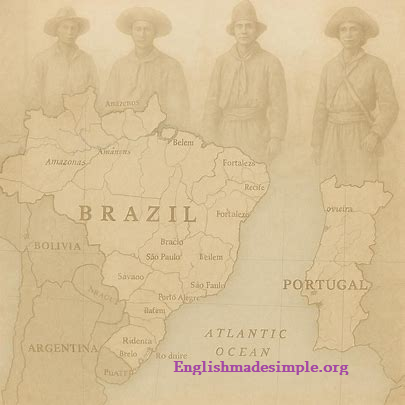
Portuguese (Portuguese: português, [puɾtuˈɡeʃ] or [poɾtuˈɡes]) is a Romance language that originated in the Iberian Peninsula of Europe. It is the official language of Portugal, Brazil, Mozambique, Angola, Cape Verde, Guinea-Bissau, São Tomé and Príncipe, and Timor-Leste, and has official or co-official status in Macau and Equatorial Guinea. As of the 2020s, it is spoken by approximately 250–260 million people worldwide, ranking as the sixth most spoken language in the world and the third most spoken European language, after English and Spanish.
Classification
Portuguese belongs to the Indo-European language family, within the Italic branch, and more specifically to the Romance group of languages descended from Vulgar Latin. Within the Romance group, Portuguese forms part of the Western Romance subgroup and the Ibero-Romance family, closely related to Galician, Spanish, and Catalan.
Its closest relative is Galician, spoken in northwestern Spain. Historically, the two formed a single linguistic continuum known as Galician-Portuguese, the literary language of the medieval Kingdom of Galicia and northern Portugal. While they have since diverged, mutual intelligibility between Portuguese and Galician remains high, particularly in traditional speech.
Portuguese and Spanish share roughly 85–90% lexical similarity, though differences in phonology and syntax limit spoken comprehension. Written mutual intelligibility, however, remains substantial.
Origins and Historical Development
Portuguese evolved from Vulgar Latin, the spoken form of Latin brought to the Iberian Peninsula by Roman settlers and soldiers after the Roman conquest in the 3rd century BCE. Following the collapse of Roman rule, local Latin dialects developed in relative isolation, influenced by pre-Roman substrata, Germanic (Suebi, Visigothic), and Arabic elements.
The earliest recorded texts in the Galician-Portuguese language appear in the 12th century. The lyrical poetry of the trovadores (troubadours) and the Cantigas de Santa Maria (13th century) are notable early examples. By the late Middle Ages, the language spoken in the Kingdom of Portugal had evolved distinct features, forming the basis of modern Portuguese.
The Age of Discovery (15th–17th centuries) carried Portuguese overseas, where it became a global lingua franca of trade and administration. Contacts with African, Asian, and Indigenous American languages left a deep imprint on its vocabulary and phonetics. In Brazil, Portuguese evolved under the influence of Indigenous Tupi-Guarani languages, African languages, and later European immigration, resulting in the distinct Brazilian Portuguese varieties known today.
Geographic Distribution
Portuguese is now a truly global language.
-
Europe: Portugal (mainland and islands).
-
South America: Brazil, with roughly 215 million speakers, representing over 80% of Lusophones.
-
Africa: Angola, Mozambique, Cape Verde, Guinea-Bissau, São Tomé and Príncipe.
-
Asia and Oceania: East Timor, Macau, Goa (India), and small Lusophone communities in Malaysia.
-
Diaspora: Significant Portuguese-speaking communities exist in France, Luxembourg, Switzerland, Canada, the United States, Japan, and Australia.
Famous Works in Portuguese Literature
Portuguese literature is among the richest in the Romance world. Notable works include:
-
Os Lusíadas (1572) by Luís de Camões — the national epic of Portugal, celebrating Vasco da Gama’s voyage to India.
-
Dom Casmurro (1899) by Machado de Assis — a Brazilian psychological novel exploring love and jealousy.
-
Mensagem (1934) by Fernando Pessoa — a modernist poetic meditation on Portugal’s past and destiny.
-
Grande Sertão: Veredas (1956) by João Guimarães Rosa — an experimental Brazilian novel noted for linguistic innovation and regional speech.
Other major figures include Eça de Queirós, Clarice Lispector, José Saramago (Nobel Prize in Literature, 1998), and Mia Couto of Mozambique.
Grammar
1. Articles: Definite and Indefinite
Portuguese uses definite and indefinite articles that agree in gender (masculine/feminine) and number (singular/plural) with the nouns they accompany.
Definite Articles
| English | Masculine | Feminine | Plural (M) | Plural (F) |
|---|---|---|---|---|
| the | o | a | os | as |
Example:
-
O carro é novo. (“The car is new.”)
-
As casas são grandes. (“The houses are big.”)
Indefinite Articles
| English | Masculine | Feminine | Plural (M) | Plural (F) |
|---|---|---|---|---|
| a / an / some | um | uma | uns | umas |
Example:
-
Um livro interessante. (“An interesting book.”)
-
Umas meninas simpáticas. (“Some nice girls.”)
Regional Differences
-
In Brazilian Portuguese, articles before names are common:
→ A Maria chegou cedo. (“Maria arrived early.”) -
In European Portuguese, this is less frequent or more formal:
→ Maria chegou cedo.
2. Demonstrative Pronouns
Demonstratives indicate proximity and vary depending on whether the object is near the speaker, near the listener, or far from both.
| English | Near Speaker | Near Listener | Far from Both |
|---|---|---|---|
| this/these | este, esta, estes, estas | esse, essa, esses, essas | aquele, aquela, aqueles, aquelas |
Examples:
-
Este livro é meu. (“This book is mine.”)
-
Esse livro é seu. (“That book is yours.”)
-
Aquele livro é antigo. (“That book over there is old.”)
Brazil vs. Portugal
Brazilian speakers often merge the distinction between este and esse, using esse for both “this” and “that.”
In Portugal, the three-way distinction is generally preserved.
3. Relative Pronouns
Relative pronouns connect clauses and refer back to a noun or pronoun previously mentioned.
| Pronoun | Function | Example |
|---|---|---|
| que | who / that / which | O homem que falou é meu pai. (“The man who spoke is my father.”) |
| quem | who (after preposition) | A mulher com quem falei. (“The woman with whom I spoke.”) |
| onde | where | A cidade onde nasci. (“The city where I was born.”) |
| cujo / cuja | whose | O autor cuja obra admiro. (“The author whose work I admire.”) |
Note:
European Portuguese tends to preserve cujo in formal writing, while Brazilian Portuguese often replaces it with de que constructions:
-
EP: A mulher cujo filho estuda aqui.
-
BP: A mulher que o filho dela estuda aqui.
4. Verb Tenses and Conjugation
Portuguese verbs are inflected for person, number, tense, and mood, following patterns typical of Romance languages. There are three conjugations, determined by the infinitive ending:
| Conjugation | Example | Verb Type |
|---|---|---|
| -ar | falar (“to speak”) | Regular |
| -er | comer (“to eat”) | Regular |
| -ir | partir (“to leave”) | Regular |
Present Tense (Presente do Indicativo)
-
Eu falo. (“I speak.”)
-
Tu falas. (“You speak.”)
-
Ele fala. (“He speaks.”)
Preterite (Pretérito Perfeito)
-
Eu falei com ela. (“I spoke with her.”)
Future Tense
-
Falaremos amanhã. (“We will speak tomorrow.”)
Brazil vs. Portugal
-
In spoken Brazilian Portuguese, the future tense is often replaced by ir + infinitive:
→ Vou falar amanhã. (“I’m going to speak tomorrow.”) -
European Portuguese maintains both forms, though ir + infinitive is also common.
Pronoun Position
-
In Brazil, pronouns usually precede the verb (Ele me viu).
-
In Portugal, they often follow the verb (Ele viu-me).
5. Sentence Structure
Portuguese typically follows Subject–Verb–Object (SVO) order, similar to English. However, word order can be flexible for emphasis or style:
-
Eu comprei o livro ontem. (“I bought the book yesterday.”)
-
Ontem comprei o livro. (“Yesterday I bought the book.”)
Inversion and Clitics
European Portuguese favors enclitic pronouns (attached after verbs):
-
Dá-me o livro. (“Give me the book.”)
Brazilian Portuguese prefers proclitic pronouns: -
Me dá o livro.
6. Regional Dialectal Variation
In Portugal
-
Northern dialects preserve older phonetic forms (e.g., vós for “you [plural]*).
-
Lisbon speech tends to simplify unstressed vowels.
-
Alentejo and Algarve regions have slower rhythm and open vowels.
In Brazil
-
Northeastern Portuguese maintains archaic forms and melodic intonation.
-
Southern dialects (e.g., in Rio Grande do Sul) show influence from Spanish.
-
Carioca Portuguese (Rio de Janeiro) features the famous “sh” sound for s before consonants.
Example of dialectal difference in pronunciation:
-
Standard BP: mas tarde → [mas ˈtaʁdʒi]
-
Rio (Carioca): [maʃ ˈtaʁdʒi]
-
Lisbon: [mɐʃ ˈtaɾðɨ]
7. Portuguese Among the Romance Languages
Portuguese shares Latin roots with Spanish, Italian, and French, but has distinct features:
| Feature | Portuguese | Spanish | Latin |
|---|---|---|---|
| Nasal vowels | yes (mão, “hand”) | no | no |
| Future subjunctive | yes (quando eu for) | no | yes (in form) |
| Personal infinitive | yes (para eu fazer) | no | no |
| Pronoun placement | variable | mostly before verb | enclitic |
Example:
-
Portuguese: Quando eu for ao mercado, comprarei pão.
-
Spanish: Cuando vaya al mercado, compraré pan.
-
Latin: Cum ad forum ibo, panem emam.
8. Classical Latin Influence
Portuguese retains many syntactic and morphological elements from Latin, including:
-
Gendered nouns and adjective agreement (o livro bonito / a casa bonita).
-
Rich verb inflection systems.
-
Use of the subjunctive mood to express doubt or uncertainty:
-
Espero que ele venha. (“I hope he comes.”)
-
Yet it diverges through sound evolution (nasalization, diphthongs) and the development of features like the personal infinitive, a unique innovation among Romance languages.
Phonology
Portuguese has a rich phonemic inventory with notable nasal vowels, palatal consonants, and vowel reduction in unstressed syllables (especially in European varieties).
Distinctive features include:
-
Nasal vowels: pão [pɐ̃w̃] (“bread”), mãe [mɐ̃j̃] (“mother”).
-
Palatal consonants: lh [ʎ] as in filho (“son”), and nh [ɲ] as in senhor (“sir”).
-
Rhotic variation: the r can be trilled [r], uvular [ʁ], or even [h], depending on region.
Vocabulary
Portuguese vocabulary is largely of Latin origin, but centuries of contact and exploration have introduced words from:
-
Germanic: guerra (“war”), roubar (“to steal”)
-
Arabic: açúcar (“sugar”), azeite (“olive oil”), alface (“lettuce”)
-
Indigenous Brazilian: mandioca (“cassava”), tapioca (“starch”)
-
African: moleque (“boy”), quilombo (“maroon settlement”)
-
Modern borrowings: computador, garagem, futebol.
Brazilian and European Portuguese
While mutually intelligible, Brazilian Portuguese (BP) and European Portuguese (EP) differ in pronunciation, grammar, and lexicon.
Pronunciation:
BP maintains open vowels and melodic rhythm (e.g., verdade [veʁˈdadʒi]), while EP features vowel reduction and faster tempo (verdade [vɨɾˈdað]).
Grammar:
-
Object pronouns: BP uses pre-verbal position (Eu o vi), EP post-verbal (Vi-o).
-
Progressive aspect: BP estar + gerund (estou falando), EP estar a + infinitive (estou a falar).
-
Pronouns: BP generalizes você, while EP maintains tu (informal) vs você (formal).
Vocabulary:
| Concept | European | Brazilian |
|---|---|---|
| Bus | autocarro | ônibus |
| Mobile phone | telemóvel | celular |
| Ice cream | gelado | sorvete |
| Bathroom | casa de banho | banheiro |
Despite such variation, spelling reforms have maintained a largely unified written standard.
Dialects and Creoles
The global spread of Portuguese has produced numerous dialects and creoles, many of which have evolved into distinct languages.
European Dialects
Within Portugal, dialects vary regionally:
-
Northern dialects retain older phonetic traits and have affinities with Galician.
-
Southern dialects, including Lisbon and Alentejo speech, show vowel reduction and simplified consonant clusters.
-
The Azorean and Madeiran dialects exhibit unique vowel systems and intonation patterns influenced by isolation and maritime contact.
Brazilian Dialects
Brazilian Portuguese exhibits remarkable diversity, from the Carioca (Rio de Janeiro) accent with its [ʃ]-like s, to Paulista, Nordestino, and Gaúcho varieties. Lexical and phonetic variation reflects Indigenous, African, and immigrant influences.
African Varieties
In Angola and Mozambique, Portuguese serves as the language of administration and education, but often coexists with numerous Bantu languages. These varieties are marked by rhythmic speech and localized vocabulary (e.g., cota “elder”, bué “a lot”).
Creoles
Portuguese contact with local populations during the colonial period produced a family of Portuguese-based creoles, particularly in Africa and Asia.
-
Cape Verdean Creole (Kriolu): The most widely spoken creole, with several regional varieties, combining Portuguese grammar and African phonology.
-
Guinea-Bissau Creole (Kriol): A lingua franca blending Portuguese and West African languages.
-
São Tomense (Forro) and Angolar: Distinct creoles of São Tomé and Príncipe.
-
Papiamentu: Spoken in Curaçao, Aruba, and Bonaire, derived from Portuguese, Spanish, and African languages.
-
Kristang: A Portuguese-Malay creole spoken in Malaysia and Singapore, dating from the 16th century.
While often influenced by other colonial or local languages, these creoles preserve strong lexical and syntactic links to early Portuguese.
Conclusion
The Portuguese language embodies over two millennia of linguistic evolution—from Latin roots to a global language bridging continents. Its expansion produced an extraordinary diversity of dialects, literatures, and creoles, while retaining a shared Lusophone identity. Today, Portuguese continues to thrive as a language of diplomacy, culture, science, and art, uniting communities across Europe, Africa, Asia, and the Americas.
Themed Phrasebook: Brazilian Portuguese
1. Greetings and Common Expressions
| Portuguese | Pronunciation | English |
|---|---|---|
| Olá! | [oˈla] | Hello! |
| Oi! | [oj] | Hi! (informal, very common in Brazil) |
| Bom dia | [bõ ˈdʒi.a] | Good morning |
| Boa tarde | [ˈbo.a ˈtaʁ.dʒi] | Good afternoon |
| Boa noite | [ˈbo.a ˈnoj.tʃi] | Good evening / Good night |
| Como vai? | [ˈko.mu ˈvaj] | How are you? |
| Tudo bem? / Tudo bom? | [ˈtu.du ˈbẽj̃] / [ˈtu.du ˈbõw̃] | Everything good? (common greeting) |
| Prazer em conhecê-lo / conhecê-la | [pɾaˈzeɾ ẽ koɲeˈse.lu / la] | Nice to meet you |
| Tchau! | [tʃaw] | Goodbye! |
| Até logo | [aˈtɛ ˈlɔ.gu] | See you soon |
Note: Brazilians often greet with smiles and informal tone. Tudo bem? is used both to say hello and to ask how someone is.
2. Politeness and Social Phrases
| Portuguese | Pronunciation | English |
|---|---|---|
| Por favor | [poʁ faˈvoʁ] | Please |
| Obrigado / Obrigada | [oˌbɾiˈga.du / da] | Thank you (masc./fem.) |
| De nada | [dʒi ˈna.da] | You’re welcome |
| Desculpe | [dʒisˈkuw.pi] | Sorry / Excuse me |
| Com licença | [kõ liˈsẽ.sa] | Excuse me (to pass or interrupt) |
| Sem problema | [sẽ pɾoˈble.ma] | No problem |
| Muito prazer | [ˈmũj.tu pɾaˈzeʁ] | Pleased to meet you |
| Fique à vontade | [ˈfi.kj a võˈta.dʒi] | Make yourself comfortable |
3. Getting Around
| Portuguese | Pronunciation | English |
|---|---|---|
| Onde fica o hotel? | [ˈõ.dʒi ˈfi.ka u oˈtɛw] | Where is the hotel? |
| Quanto custa a passagem? | [ˈkwɐ̃.tu ˈkus.ta a paˈsa.ʒẽj] | How much is the ticket? |
| Eu quero um táxi | [ew ˈkɛ.ɾu ũ ˈta.ksi] | I want a taxi |
| À esquerda / À direita | [a isˈkeʁ.da / a dʒiˈɾej.ta] | To the left / To the right |
| Perto / Longe | [ˈpɛʁ.tu / ˈlõ.ʒi] | Near / Far |
| Estou perdido | [isˈtow peʁˈdʒi.du] | I’m lost |
| Pode me ajudar? | [ˈpɔ.dʒi mi aʒuˈdaʁ] | Can you help me? |
4. At the Hotel or Restaurant
| Portuguese | Pronunciation | English |
|---|---|---|
| Eu tenho uma reserva | [ew ˈtẽ.ju ˈu.ma ʁeˈzeʁ.va] | I have a reservation |
| Tem quarto disponível? | [tẽ ˈkwaʁ.tu dʒis.poˈni.viw] | Do you have a room available? |
| O cardápio, por favor | [u kaʁˈda.pju poʁ faˈvoʁ] | The menu, please |
| Eu quero isso | [ew ˈkɛ.ɾu ˈi.su] | I want this |
| A conta, por favor | [a ˈkõ.ta poʁ faˈvoʁ] | The bill, please |
| Está incluído o serviço? | [isˈta ĩk.luˈi.du u seʁˈvi.su] | Is service included? |
| Delicioso! | [de.li.sjˈo.zu] | Delicious! |
| Água sem gás / com gás | [ˈa.gwa sẽ ˈgas / kõ ˈgas] | Still / sparkling water |
Tip: Brazilian restaurants often include a 10% service charge (serviço).
5. Shopping and Money
| Portuguese | Pronunciation | English |
|---|---|---|
| Quanto custa? | [ˈkwɐ̃.tu ˈkus.ta] | How much does it cost? |
| Posso pagar com cartão? | [ˈpɔ.su paˈgaʁ kõ kaʁˈtõw] | Can I pay by card? |
| É muito caro! | [ɛ ˈmũj.tu ˈka.ɾu] | It’s too expensive! |
| Tem desconto? | [tẽ dʒisˈkõ.tu] | Is there a discount? |
| Estou só olhando | [isˈtow sɔ oˈʎɐ̃.du] | I’m just looking |
| Onde fica o caixa? | [ˈõ.dʒi ˈfi.ka u ˈkaj.ʃa] | Where is the checkout? |
6. Time, Numbers, and Directions
| Portuguese | English |
|---|---|
| Que horas são? | What time is it? |
| Agora | Now |
| Hoje / Amanhã | Today / Tomorrow |
| Um, dois, três, quatro, cinco | One, two, three, four, five |
| Dez, vinte, trinta, cem | Ten, twenty, thirty, one hundred |
| À esquerda / à direita | To the left / to the right |
| Em frente | Straight ahead |
7. Emergencies
| Portuguese | Pronunciation | English |
|---|---|---|
| Socorro! | [soˈko.hu] | Help! |
| Chame a polícia! | [ˈʃɐ.mi a poˈli.sja] | Call the police! |
| Preciso de um médico | [pɾeˈsi.zu dʒi ũ ˈmɛ.dʒi.ku] | I need a doctor |
| Estou doente | [isˈtow duˈẽ.tʃi] | I’m sick |
| Perdi meus documentos | [peʁˈdʒi mews dokuˈmẽ.tus] | I lost my documents |
| Onde fica o hospital? | [ˈõ.dʒi ˈfi.ka u oʃ.piˈtaw] | Where is the hospital? |
8. Everyday Communication and Culture
| Portuguese | English |
|---|---|
| De onde você é? | Where are you from? |
| Eu sou dos Estados Unidos / do Reino Unido / da França | I’m from the U.S. / the U.K. / France |
| Você fala inglês? | Do you speak English? |
| Um momento, por favor | One moment, please |
| Que bonito! | How beautiful! |
| Que legal! | Cool! / Nice! (very common Brazilian slang) |
| Sem problema! | No problem! |
| Tudo certo! | All good! |
9. Brazilian Expressions and Idioms
| Expression | Literal Meaning | Usage / Equivalent |
|---|---|---|
| Ficar de boa | To stay cool | To relax, take it easy |
| Dar um jeito | To give a way | To find a solution / make it work |
| Tá tudo bem | It’s all good | Everything’s fine |
| Beleza! | Beauty! | Great! / OK! |
| Pois é | Indeed | Used for agreement or mild resignation |
| Poxa! | Wow! / Darn! | Expresses surprise or disappointment |
| É mesmo? | Is that so? | Really? (shows interest) |
10. At the Beach and in Daily Life
| Portuguese | English |
|---|---|
| Vamos à praia! | Let’s go to the beach! |
| Está muito quente hoje | It’s very hot today |
| Eu quero um suco de frutas | I want a fruit juice |
| Onde posso trocar dinheiro? | Where can I exchange money? |
| Que música boa! | What a great song! |
| Vamos dançar! | Let’s dance! |
| Até logo! | See you soon! |
Pronunciation Notes
-
ão → nasalized, like ow in down: pão (“bread”).
-
lh → like lli in million: filho (“son”).
-
nh → like ny in canyon: banho (“bath”).
-
r at word start or rr → throaty, like French r: carro (“car”).
Cultural Note
Brazilian Portuguese favors friendliness, warmth, and informality. People often address each other by first name and use affectionate diminutives (amiguinho, cafezinho, rapidinho). The tone of voice and facial expression carry great communicative weight—intonation can soften or intensify meaning more than in many European languages.
Conclusion
This phrasebook highlights the everyday expressiveness of Brazilian Portuguese, a language rich in rhythm, warmth, and regional color. Its flexibility and melodic intonation reflect Brazil’s cultural diversity and openness, making it both approachable and deeply expressive for learners and travelers alike.
- Afrikaans, click on this link.
- Albanian, click on this link.
- Amharic, click on this link.
- Arabic, click on this link
- Armenian, click on this link.
- Assamese, click on this link.
- Aymara, click on this link.
- Azeri,click on this link.
- Bambara, click on this link.
- Basque, click on this link.
- Belarusian, click on this link.
- Bengali, click on this link.
- Bosnian, click on this link.
- Bulgarian, click on this link.
- Catalan, click on this link.
- Cebuano, click on this link.
- Chewa, click on this link.
- Chinese, click on this link.
- Corsican, click on this link.
- Croatian, click on this link.
- Czech, click on this link.
- Danish, click on this link.
- Dhivehi, click on this link.
- Dogri, click on this link.
- Dutch, click on this link.
- Estonian, click on this link.
- Ewe, click on this link.
- Faroese, click on this link.
- Fijian, click on this link.
- Filipino, click on this link.
- Finnish, click on this link.
- Fon, click on this link.
- French, click on this link.
- Frisian, click on this link.
- Fulani, click on this link.
- Ga, click on this link.
- Galician, click on this link.
- Georgian, click on this link.
- German, click on this link.
- Greek, click on this link.
- Guarani, click on this link.
- Hausa, click on this link.
- Hawaiian, click on this link.
- Hindi, click on this link.
- Hunsrick, click on this link.
- Hungarian, click on this link.
- Icelandic, click on this link.
- Igbo, click on this link.
- Ilocano, click on this link.
- Indonesian, click on this link.
- Inuktut, click on this link.
- Irish, click on this link.
- Spanish, click on this link.