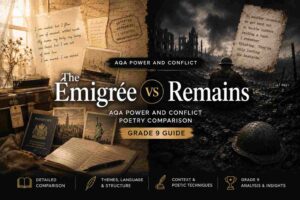
The Émigrée vs Charge of the Light Brigade: AQA Power and Conflict Poetry Comparison (Grade 9 Guide)
Introduction
The Émigrée by Carol Rumens and Charge of the Light Brigade by Alfred Lord Tennyson both explore conflict, power, and human vulnerability, but from very different perspectives. Rumens focuses on the emotional effects of political conflict and exile, while Tennyson presents the bravery and suffering of soldiers during a disastrous military charge. Together, the poems suggest that conflict shapes identity, memory, and human experience in powerful and lasting ways.
Quick Comparison Summary
| Theme | The Émigrée | Charge of the Light Brigade |
|---|---|---|
| Conflict | Political conflict / exile | Military conflict / war |
| Power | Political oppression | Military authority |
| Perspective | Reflective exile | Narrative observer |
| Tone | Nostalgic, defiant | Admiring, tragic |
| Structure | Controlled, reflective | Rhythmic and repetitive |

Order Book Now
The Émigrée and Charge of the Light Brigade: key similarities
Similarity 1: Both poems explore the effects of conflict
In The Émigrée, conflict causes displacement and separation.
In Charge of the Light Brigade, conflict leads to death and suffering.
Grade 9 Comparison Point:
Both poets show that conflict has serious consequences for individuals.
Similarity 2: Both poems explore power
Rumens presents political power forcing exile.
Tennyson presents military authority directing soldiers into danger.
Grade 9 Comparison Point:
Both poems show individuals affected by larger systems of power.
Similarity 3: Both poems present human vulnerability
The speaker in The Émigrée is emotionally vulnerable because of displacement.
The soldiers in Charge of the Light Brigade are physically vulnerable in battle.
Grade 9 Comparison Point:
Both poems highlight the vulnerability of people during conflict.
The Émigrée and Charge of the Light Brigade: key differences
Difference 1: Presentation of conflict
The Émigrée
Conflict is remembered emotionally.
Charge of the Light Brigade
Conflict is immediate and physical.
Grade 9 Comparison Point:
Rumens focuses on emotional consequences, Tennyson on battlefield action.
Difference 2: Tone
The Émigrée
Reflective and hopeful.
Charge of the Light Brigade
Patriotic and tragic.
Grade 9 Comparison Point:
Rumens preserves nostalgia, Tennyson celebrates bravery despite disaster.
Difference 3: Structure
The Émigrée
- Controlled form
- Three stanzas
Charge of the Light Brigade
- Repetition
- Galloping rhythm
Grade 9 Comparison Point:
Rumens reflects emotional control, Tennyson reflects movement and urgency.

Buy T-Shirt Now
Key Quotes Comparison Table
| The Émigrée | Charge of the Light Brigade |
|---|---|
| “sunlight-clear” | “Into the valley of Death” |
| “There once was a country” | “Theirs not to reason why” |
| “they accuse me” | “Someone had blunder’d” |
| “my memory of it is sunlight-clear” | “Honour the Light Brigade” |
Context Comparison
The Émigrée
- Political exile and displacement
- Identity shaped by memory
Charge of the Light Brigade
- Crimean War
- Based on real military disaster
- Explores duty and patriotism
The Émigrée and Charge of the Light Brigade: Grade 9 model answers
Exam Question 1
Compare how poets present the effects of conflict in The Émigrée and Charge of the Light Brigade.
Grade 9 Model Response
Both Rumens and Tennyson present conflict as having serious consequences, but they explore these effects in different ways. In The Émigrée, conflict causes displacement and separation from the speaker’s homeland. The phrase “There once was a country” creates a sense of distance and nostalgia, suggesting that the speaker’s relationship with her homeland now exists mainly through memory. However, the repeated description of the country as “sunlight-clear” suggests that memory allows the speaker to preserve a positive sense of identity despite exile.
In contrast, Charge of the Light Brigade presents conflict as immediate and deadly. The repeated movement into “the valley of Death” emphasises the danger faced by the soldiers. Tennyson presents the physical consequences of war through violent imagery and references to cannon fire. Unlike Rumens’ reflective speaker, the soldiers experience conflict directly and collectively.
Structurally, Rumens uses a controlled and stable form to reflect emotional resilience, while Tennyson uses repetition and rhythm to mirror the relentless movement of the charge.
Therefore, both poets present conflict as deeply impactful, but Rumens focuses on emotional displacement, while Tennyson highlights physical danger and sacrifice.
Exam Question 2
Compare how poets present power in The Émigrée and Charge of the Light Brigade.
Grade 9 Model Response
Both poems explore power and its effects, but they present it differently. In The Émigrée, power is political and linked to oppression. The phrase “they accuse me” suggests that authorities attempt to challenge or silence the speaker. However, the speaker resists this power through memory, preserving her personal identity.
In Charge of the Light Brigade, power is associated with military authority. The line “Theirs not to reason why” suggests that soldiers are expected to obey orders without question. This presents military power as controlling and unquestionable. The acknowledgement that “Someone had blunder’d” also suggests criticism of leadership.
Structurally, Rumens’ stable form reflects resistance and control, while Tennyson’s repetitive rhythm reflects the unstoppable movement created by military command.
Therefore, both poets show individuals affected by larger powers, but Rumens focuses on resistance through memory, while Tennyson highlights obedience and sacrifice.
Exam Question 3
Compare how poets present human vulnerability.
Grade 9 Model Response
Both Rumens and Tennyson present humans as vulnerable during conflict, but they focus on different forms of vulnerability. In The Émigrée, vulnerability is emotional and linked to displacement. The speaker has lost her homeland and faces judgement, shown in “they accuse me”. However, her positive memories suggest emotional resilience.
In Charge of the Light Brigade, vulnerability is physical. The soldiers are exposed to extreme danger as they ride “Into the valley of Death”. The repeated references to cannon fire emphasise the deadly conditions they face.
Structurally, Rumens’ controlled structure reflects emotional stability, while Tennyson’s rhythmic repetition reflects the relentless movement toward danger.
Therefore, both poets show that conflict creates vulnerability, but Rumens focuses on emotional displacement, while Tennyson highlights physical sacrifice and bravery.
Further Revision Links
- AQA Power and Conflict Poetry Anthology (All 15 Poems): https://englishmadesimple.org/aqa-power-and-conflict-poetry-anthology-complete-gcse-revision-guide-all-15-poems/
- The Émigrée – GCSE Poetry Guide: https://englishmadesimple.org/the-emigree-by-carol-rumens-gcse-poetry/
- Charge of the Light Brigade – GCSE Poetry Guide: https://englishmadesimple.org/charge-of-the-light-brigade-by-alfred-lord-tennyson-gcse-poetry/
You might also like…
- Exposure vs Charge of the Light Brigade: https://englishmadesimple.org/exposure-vs-charge-of-the-light-brigade-aqa-power-and-conflict-poetry-comparison-grade-9-guide/
- Bayonet Charge vs Charge of the Light Brigade: https://englishmadesimple.org/bayonet-charge-vs-charge-of-the-light-brigade-aqa-power-and-conflict-poetry-comparison-grade-9-guide/
- The Émigrée vs Bayonet Charge: https://englishmadesimple.org/the-emigree-vs-bayonet-charge-aqa-power-and-conflict-poetry-comparison-grade-9-guide/
Final Grade 9 Tip
When comparing these poems, remember: Rumens presents conflict as emotionally shaping identity through exile and memory, while Tennyson presents conflict as physically destructive but tied to ideas of duty and honour.