Table of Contents
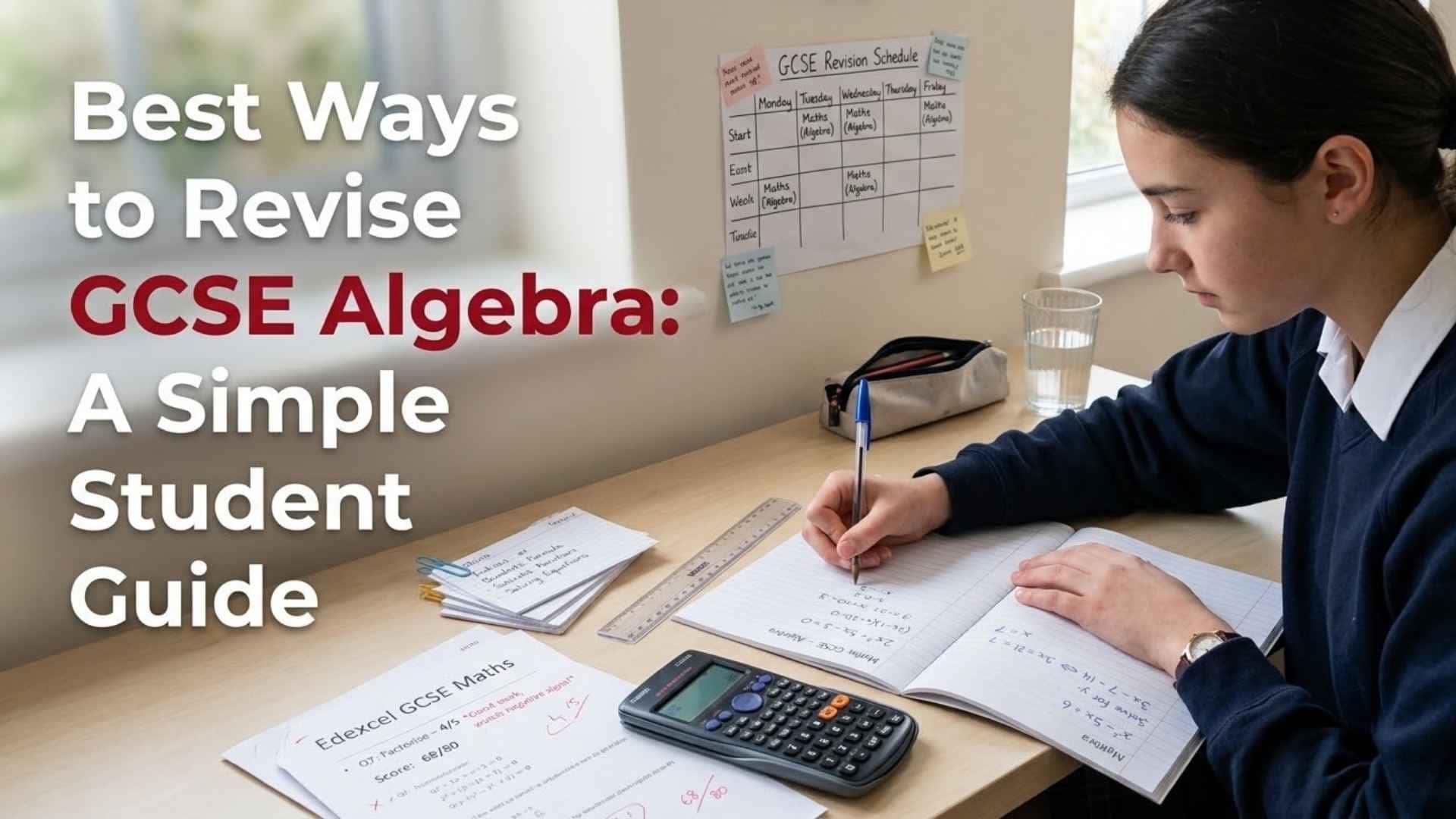
Algebra can feel like one of those GCSE Maths topics where everything is fine until letters, brackets and negative signs arrive in the same question. The good news is that you do not need to revise it by staring at pages of notes. The best ways to revise GCSE algebra are active, simple and easy to repeat. A good GCSE maths revision routine should help you remember methods, spot weak topics and answer questions without needing your notes beside you. The aim is to make each revision session useful.
Start by Finding Your Weakest Algebra Topics
Before you revise everything, work out what actually causes you trouble. Try a short mixed set of algebra questions and mark it carefully. Write down the topics where you lost marks, such as solving equations, factorising, substitution, sequences, graphs or quadratics. This is one of the best ways to revise GCSE algebra because it stops you spending most of your time on topics you already know.
If expanding brackets is easy but rearranging formulae is not, your next session should focus on rearranging formulae. For GCSE algebra revision, keep a small “weak topics” list. Update it after homework, class tests and mocks. When a topic starts becoming reliable, move it down the list and give more time to the next weakness.
Revise Algebra by Doing Questions, Not Just Reading Notes
During GCSE maths revision, use a pen and paper as much as possible. Write every important step, especially with negative numbers, brackets and equations. If you make a mistake, you can then see exactly where your working changed. One of the best ways to revise GCSE algebra is to use a short cycle: learn, practise, mark, fix. Spend a few minutes reminding yourself of the method, answer several questions, mark them, and then redo the ones you got wrong without copying the answer.
Use Short, Focused Practice Sessions
Regular GCSE algebra practice is especially useful for skills that depend on accuracy. Solving equations, collecting like terms and expanding brackets become easier when the steps feel familiar rather than new every time.
Learn the Method, Then Test Yourself Without Help
This is one of the best ways to revise GCSE algebra because it shows the difference between recognising a method and actually remembering it. If you get stuck, check only the step you need, then start the question again. During GCSE maths revision, avoid copying full worked solutions line by line. You can feel busy without checking whether you could solve the question independently.
Keep an Algebra Mistake Book
Your mistakes are useful revision material. When you get a question wrong, do not just write the correct answer beside it. Record what went wrong. Was it a sign error? Did you expand only one term? Did you choose the wrong method?
Good GCSE algebra revision should include questions you previously got wrong. Try them again a few days later. If you can now complete them without help, the correction has probably been more useful than simply reading the mark scheme once.
Best Ways to Revise GCSE Algebra with Past Papers
Using GCSE algebra questions from reliable revision resources can help you get used to exam wording and different question styles. Check your method afterwards with an official mark scheme. One of the best ways to revise GCSE algebra with past papers is to collect the algebra questions you missed. Group them by topic. If three different papers show that you struggle with simultaneous equations, that is a clear revision priority.
Mark Your Work Properly
Marking is part of revision, not the boring bit after revision. Check each line and work out why a mark was lost. A wrong answer caused by one arithmetic slip needs a different fix from a question where you did not know how to begin. When using GCSE maths revision materials, use mark schemes to see what a complete method looks like. If your answer is correct but your working is unclear, practise writing the steps more neatly so you can follow them under exam pressure.
Mix Algebra Topics Once the Basics Feel Secure
Topic practice is useful when you are learning. Later, mix different algebra skills together. Try a sequence question, then an equation, then a graph, then factorising. This forces you to decide which method the question needs. Mixed GCSE algebra practice is closer to the experience of an exam because the paper does not tell you, “This is an expanding brackets question.” You have to recognise the clues yourself. The best ways to revise GCSE algebra should therefore change over time. Start with focused topic practice, then move towards mixed sets and timed exam questions as your confidence improves.
Do Not Ignore the Basic Skills
A strong GCSE maths revision plan gives time to the basics as well as difficult questions. If you can manipulate numbers and signs accurately, expanding, factorising and solving equations becomes much more manageable. For GCSE algebra revision, make sure you can confidently simplify expressions, substitute values, expand brackets, factorise, solve linear equations and work with sequences before assuming the basics are finished.
Use a Simple Weekly Algebra Routine
One of the best ways to revise GCSE algebra is to revisit a topic after a gap. If you can still solve the questions several days later, that is a better sign than getting everything right immediately after watching an explanation. Use GCSE algebra questions more often as you get closer to mocks or final exams. Time short sets when useful, mark them carefully and turn every repeated mistake into a topic for your next revision session.
What Should You Revise First?
Your GCSE maths revision should become more personal as you collect evidence from homework, mocks and practice questions. A simple list of “secure”, “needs practice” and “not confident yet” can help you decide what to do next.
Final Advice from a GCSE Maths Teacher
The best ways to revise GCSE algebra are not complicated: find your weak areas, practise with a pen, mark carefully, redo mistakes and gradually move towards mixed exam questions. Small, focused sessions repeated regularly are easier to learn from than one long session where you simply read notes. Keep your GCSE maths revision active. If you are answering questions, checking methods and fixing mistakes, you are giving yourself useful evidence about what you can do and what still needs work.
FAQs
How long should I revise GCSE algebra for?
There is no single perfect session length. A focused 20 to 30 minutes on one clear skill can be useful. What matters most is that you answer questions, check your work and return to weak topics regularly.
Are past papers the best way to revise algebra?
They are very useful once you know the main methods. If a particular topic is weak, start with focused questions first. Then use full papers to practise recognising methods and working under exam conditions.
What algebra topics should I revise first?
Start with your weakest topics. If you are unsure, check your confidence with simplifying, substitution, equations, expanding brackets, factorising, sequences and graphs. These skills give you a strong base for more difficult algebra.