GCSE Biology • Higher Tier
GCSE Bioenergetics Revision Guide
Explore how living organisms capture, store and release energy. Revise photosynthesis, limiting factors, the pondweed practical, aerobic and anaerobic respiration, and the response to exercise. Build your understanding with clear explanations, key equations and exam practice.
Foundation
Exam practice
Worked examples
Your Learning Pathway
Follow these steps to build your understanding and improve your exam technique.
Learn the concept
Understand how photosynthesis stores energy and respiration makes energy available for life processes.
Explore diagrams
Follow reaction equations, compare respiration pathways and explore the pondweed investigation.
Check key terms
Review chlorophyll, limiting factor, aerobic, anaerobic, fermentation and oxygen debt.
Apply exam skills
Use scientific explanations, interpret results and evaluate practical methods.
Learning Objectives
By the end of this guide, you will be able to:

Explain photosynthesis
Describe the photosynthesis equation, the role of chlorophyll and the factors affecting the rate.
Compare respiration pathways
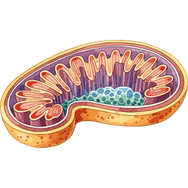
Compare aerobic and anaerobic respiration, including their products and relative energy release.

Apply practical skills
Plan the pondweed investigation, identify variables and use oxygen production to estimate photosynthesis rate.
What You'll Learn
Photosynthesis
Photosynthesis Required Practical
Anaerobic Respiration
Limiting factors of Photosynthesis
Respiration
Photosynthesis & Respiration
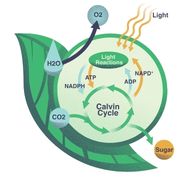
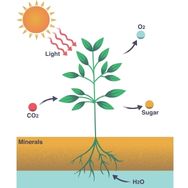
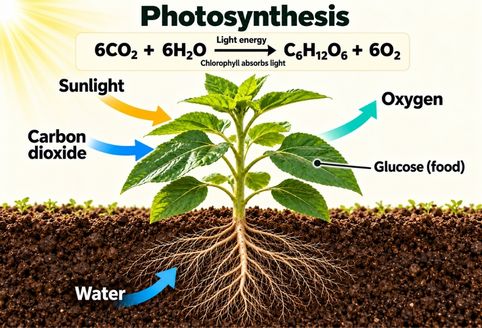
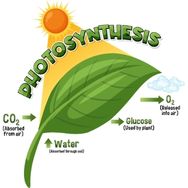
Photosynthesis uses light energy to build glucose. Respiration releases energy from glucose for cellular activities. Plants carry out both processes.
- Photosynthesis
- Takes place in chloroplasts containing chlorophyll.
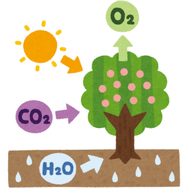
- Uses carbon dioxide and water to produce glucose and oxygen.
- Requires light energy, so the overall process is endothermic.
- Supports plant growth and provides food for most food chains.
- Occurs when suitable light and other conditions are available.
- Respiration
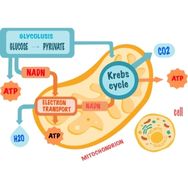
- Takes place continuously in living cells, including plant cells.
- Releases energy for muscle contraction, active transport and building larger molecules.
- Is an exothermic process.
- Aerobic respiration uses oxygen and releases more energy per glucose molecule.
- Anaerobic respiration occurs without oxygen and releases less energy per glucose molecule.
How leaves support photosynthesis
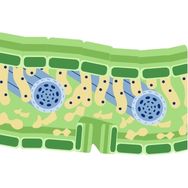
A broad surface absorbs light, while a thin leaf provides a short diffusion distance. The transparent upper epidermis lets light reach chloroplast-rich palisade cells. Stomata allow gas exchange. Xylem supplies water and phloem transports dissolved sugars, mainly sucrose, away from the leaf.
How plants use glucose
Glucose is used in respiration, converted into starch for storage and made into cellulose for cell walls. It is also converted into lipids for storage. Plants combine glucose-derived substances with nitrate ions absorbed from the soil to make amino acids, which are built into proteins.
Key Facts to Remember
Three essential facts to remember for your GCSE Biology exam.

A limiting factor restricts photosynthesis
Light intensity, carbon dioxide and temperature can limit the rate of photosynthesis.

Anaerobic products depend on the organism
Produces lactic acid in animal muscles, but ethanol and carbon dioxide in plants and yeast.

Exercise increases energy demand
Increases energy demand, raising heart rate and breathing rate to deliver more oxygen to muscles.

Photosynthesis Required Practical
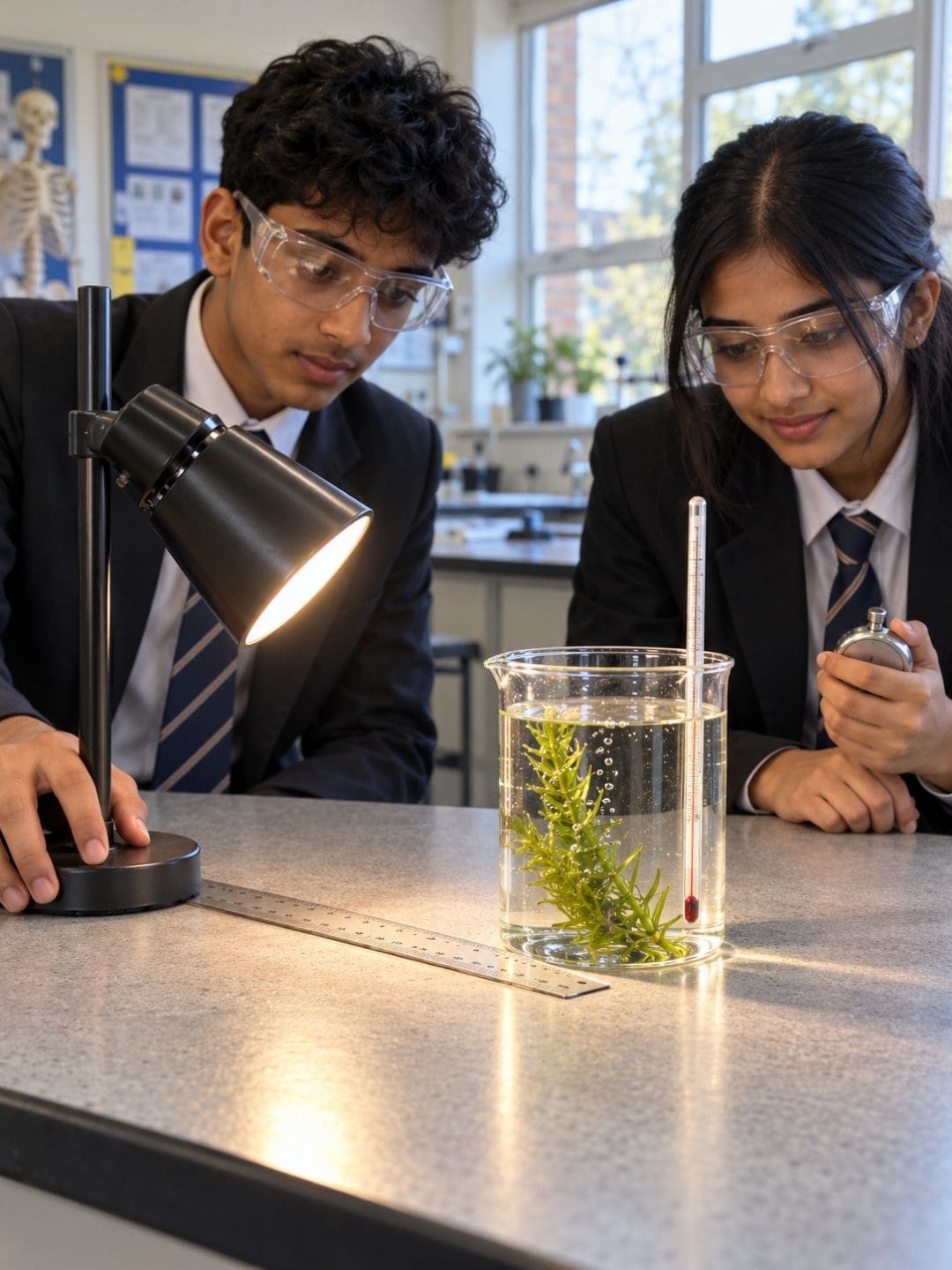
Investigate how changing light intensity affects the rate of photosynthesis in pondweed. Measure oxygen production as an estimate of the rate.
- Key Points
- Use pondweed in sodium hydrogencarbonate solution to supply CO₂.
- Vary lamp distance; keep other conditions constant.
- Let pondweed adjust before each reading.
- Measure oxygen per minute or bubbles over a fixed time.
- Repeat and average readings; a plateau indicates another limiting factor.
- Method
- 1. Place pondweed in sodium hydrogencarbonate solution with its cut end positioned to collect gas.
- 2. Set the lamp 10 cm away, using the same reference point for all distances.
- 3. Keep temperature constant with a water bath or heat shield; check with a thermometer.
- 4. Allow equal adjustment time, then measure oxygen produced in one minute.
- 5. Take three readings per distance; repeat at 20, 30, 40 and 50 cm.
- 6. Calculate mean rates; plot distance or light intensity on the x-axis and rate on the y-axis.
- Evaluation and safety
- Bubbles vary in size and can be difficult to count. Measuring collected oxygen volume with suitable gas-collection equipment gives a better estimate than bubble counts. Some oxygen dissolves in the water, so collected gas may underestimate production. Repeats reduce the influence of random variation; they do not remove systematic error. Keep electrical equipment away from water, avoid hot lamps and handle glassware carefully.
Worked Example
Worked example 1
A plant produces 1.8 cm³ of oxygen in 3 minutes.
Rate = oxygen volume ÷ time = 1.8 ÷ 3 = 0.6 cm³ per minute.
Mean = (18 + 21 + 21) ÷ 3
Worked example 2
A plant produces 2.8 cm³ of oxygen in 4 minutes.
Rate = oxygen volume ÷ time = 2.8 ÷ 4 = 0.7 cm³ per minute.
Mean = (22 + 25 + 25) ÷ 3
= 72 ÷ 3
Common GCSE Exam Questions
These are the types of questions you are likely to encounter in your exam.
- 1. State the photosynthesis equation
- 2. Explain a limiting factor graph
- 3. Compare aerobic & anaerobic respiration
- 4. Explain the response to exercise
- 5. Calculate photosynthesis rate
- 6. Evaluate the pondweed investigation
- Common GCSE Mistakes
- Confusing cellular respiration with breathing.
- Saying plants respire only at night. Plants respire in daylight and darkness.
- Mixing up lactic acid production in animals with ethanol and carbon dioxide production in yeast.
- Saying that increasing light always increases photosynthesis, even after a plateau.
- Writing that respiration creates energy rather than releases or transfers it.
- Confusing the variable changed with the oxygen production measured.
- Exam Tips
- Learn the word equations and practise balanced symbol equations where required by your specification.
- Make direct comparisons using the same feature for both processes.
- Explain graphs using light absorption, enzyme activity and limiting factors.
- Show each calculation step and give the correct units.
- For evaluation questions, link each improvement to a weakness in the method.
- Match the detail of your answer to the command word and available marks.
Ready to Practice?
Watch the Cells Tutorial
Explore cell structure and function, the differences between plant and animal cells, and essential processes such as diffusion, osmosis and mitosis. Perfect for visual learners preparing for their GCSE Biology exams.
- 12 minute comprehensive guide
- High-definition whiteboard walk-through
Frequently Asked Questions
Bioenergetics explores energy transfers in living organisms. The main topics include photosynthesis, limiting factors, respiration, exercise and metabolism. You also learn how practical investigations can provide evidence about the rate of photosynthesis.
Photosynthesis uses light energy to produce glucose from carbon dioxide and water, releasing oxygen. Respiration releases energy from glucose for cellular activities. Plants photosynthesise when suitable light is available and respire continuously, including at night.
Light intensity, carbon dioxide concentration and temperature are the main factors studied at GCSE. Chlorophyll content and water availability also affect the rate. Increasing one factor helps only when it is limiting; another factor may then restrict the rate.
Pondweed is placed in sodium hydrogencarbonate solution and exposed to a lamp at different distances. Oxygen production is measured over a fixed time. Temperature and other relevant conditions are controlled, readings are repeated and mean rates are compared.
Animal muscle cells produce lactic acid. Yeast produces ethanol and carbon dioxide through fermentation. Neither process requires oxygen, and both release less energy per glucose molecule than aerobic respiration.
Learn the equations, compare the respiration pathways and practise explaining limiting factor graphs. Review the pondweed method, variables and improvements. Use retrieval practice and spaced revision, then complete exam questions and check your explanations against the relevant mark scheme.